



47 products

Filter Filter
Filter
Filter

47 products

47 products

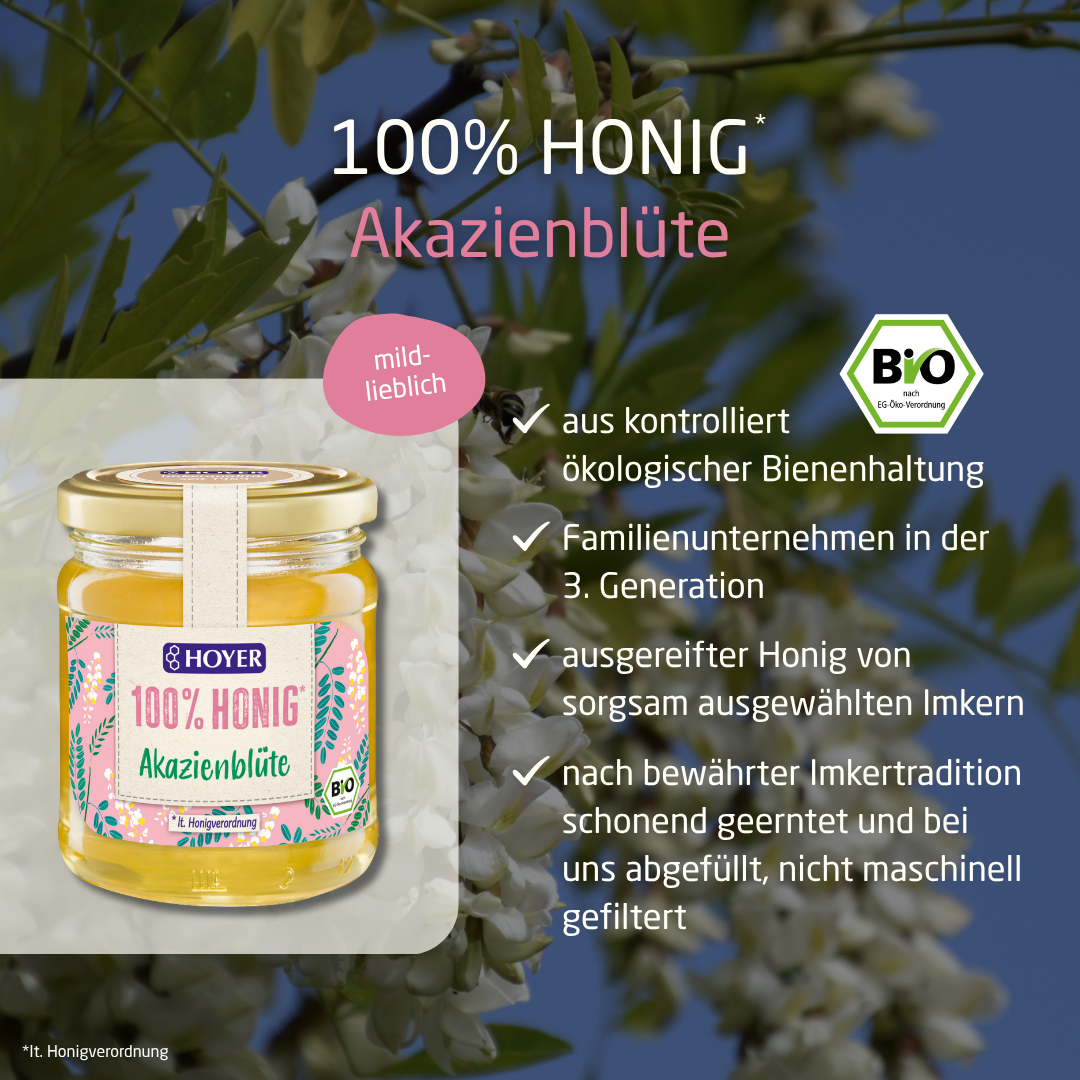
  • Acacia honey
    Acacia honeyAcacia honey
    Vendor:
    Acacia honey
    Regular price
    €5,99 €10,99
    Regular price
    Sale price
    €5,99 €10,99
    Unit price
    €23,96  per  kg
    Deutsches Bio-Siegel

    6 total reviews

    Choose options
    Quick view
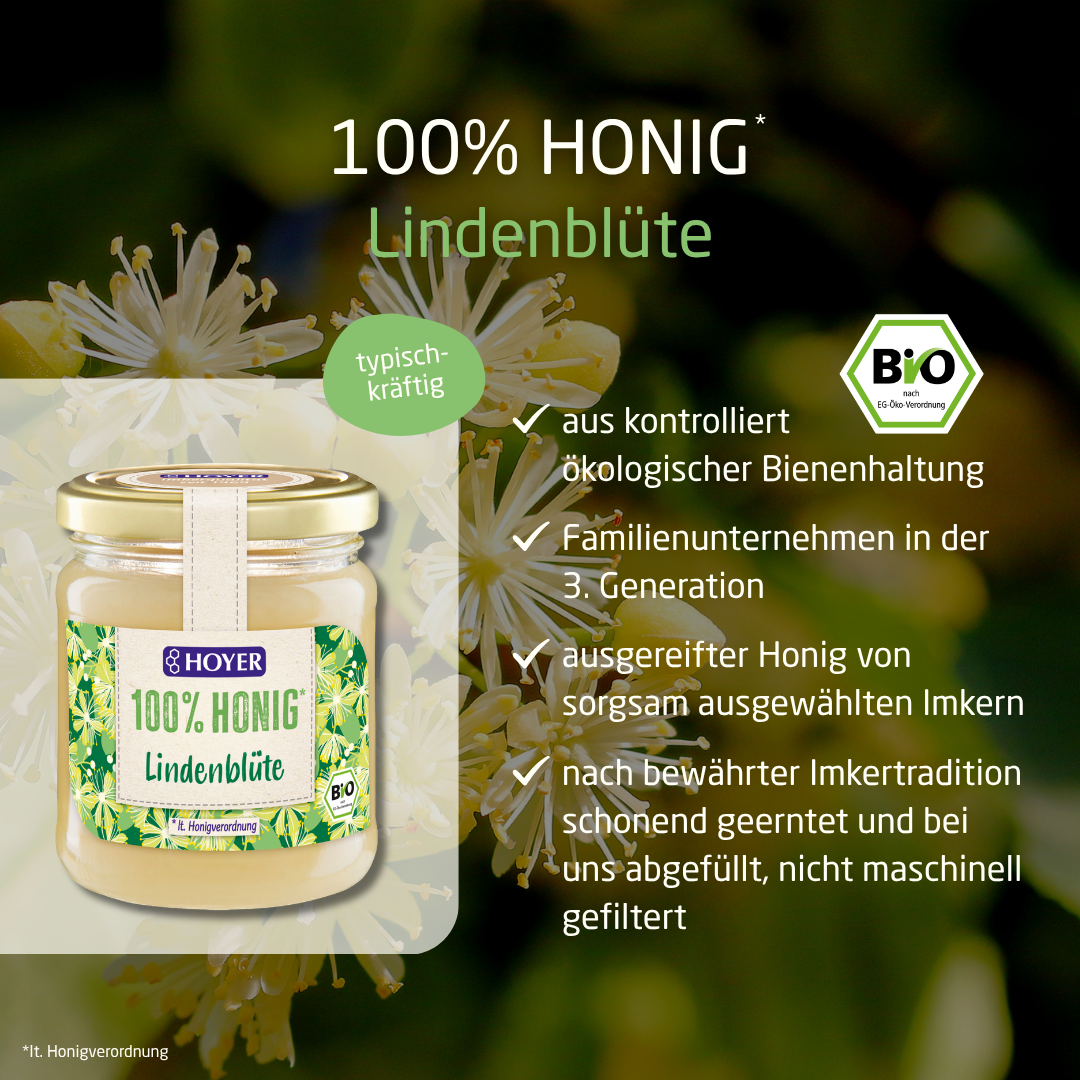
  • Lime blossom honey
    Lime blossom honeyLime blossom honey
    Vendor:
    Lime blossom honey
    Regular price
    €5,49
    Regular price
    Sale price
    €5,49
    Unit price
    €21,96  per  kg
    Deutsches Bio-Siegel

    3 total reviews

    Add to cart
    Quick view
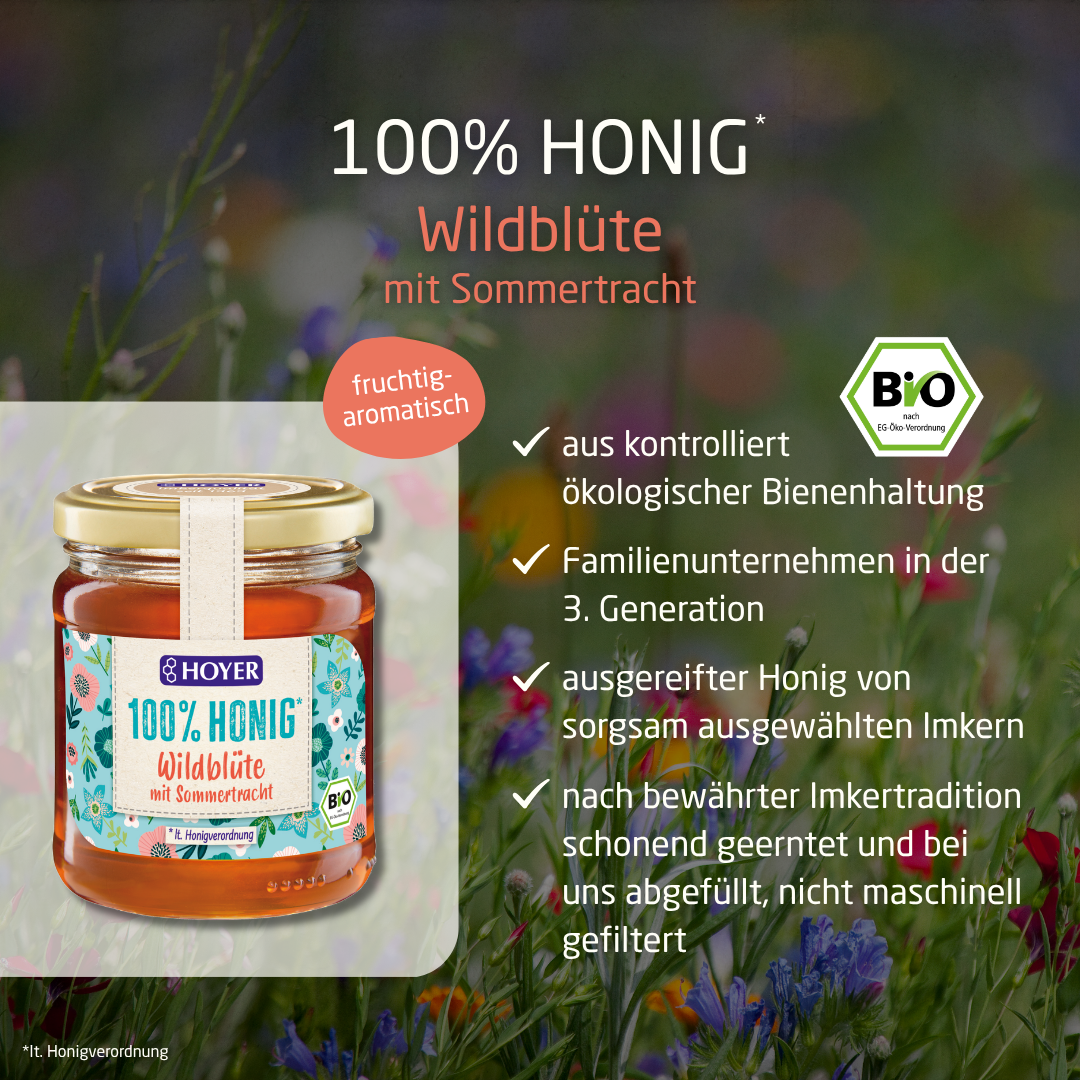
  • Wildflower honey
    Wildflower honeyWildflower honey
    Vendor:
    Wildflower honey
    Regular price
    €4,29 €7,49
    Regular price
    Sale price
    €4,29 €7,49
    Unit price
    €17,16  per  kg
    Deutsches Bio-Siegel

    4 total reviews

    Choose options
    Quick view
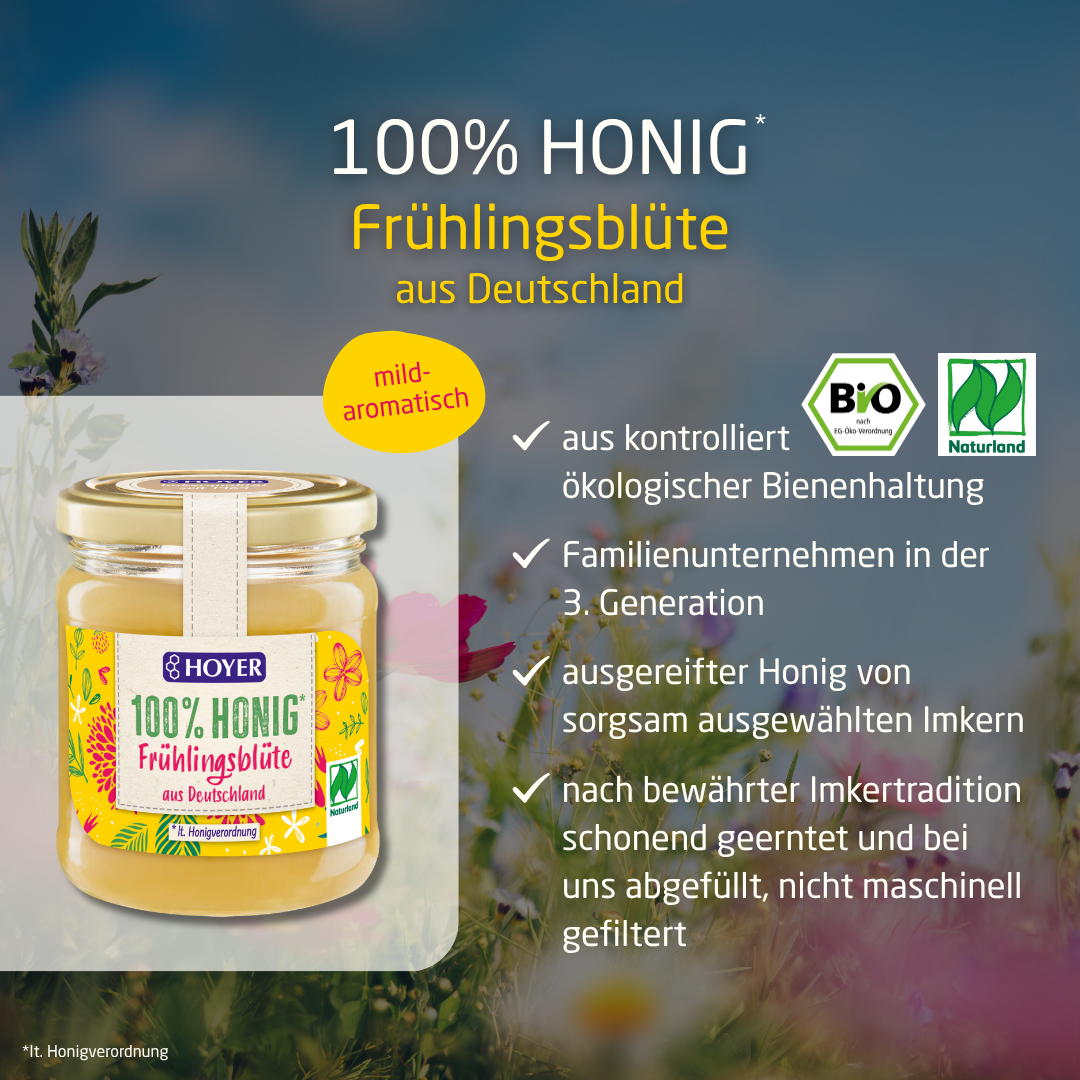
  • Spring blossom honey
    Spring blossom honeySpring blossom honey
    Vendor:
    Spring blossom honey
    Regular price
    €5,49 €9,99
    Regular price
    Sale price
    €5,49 €9,99
    Unit price
    €21,96  per  kg

    10 total reviews

    Choose options
    Quick view
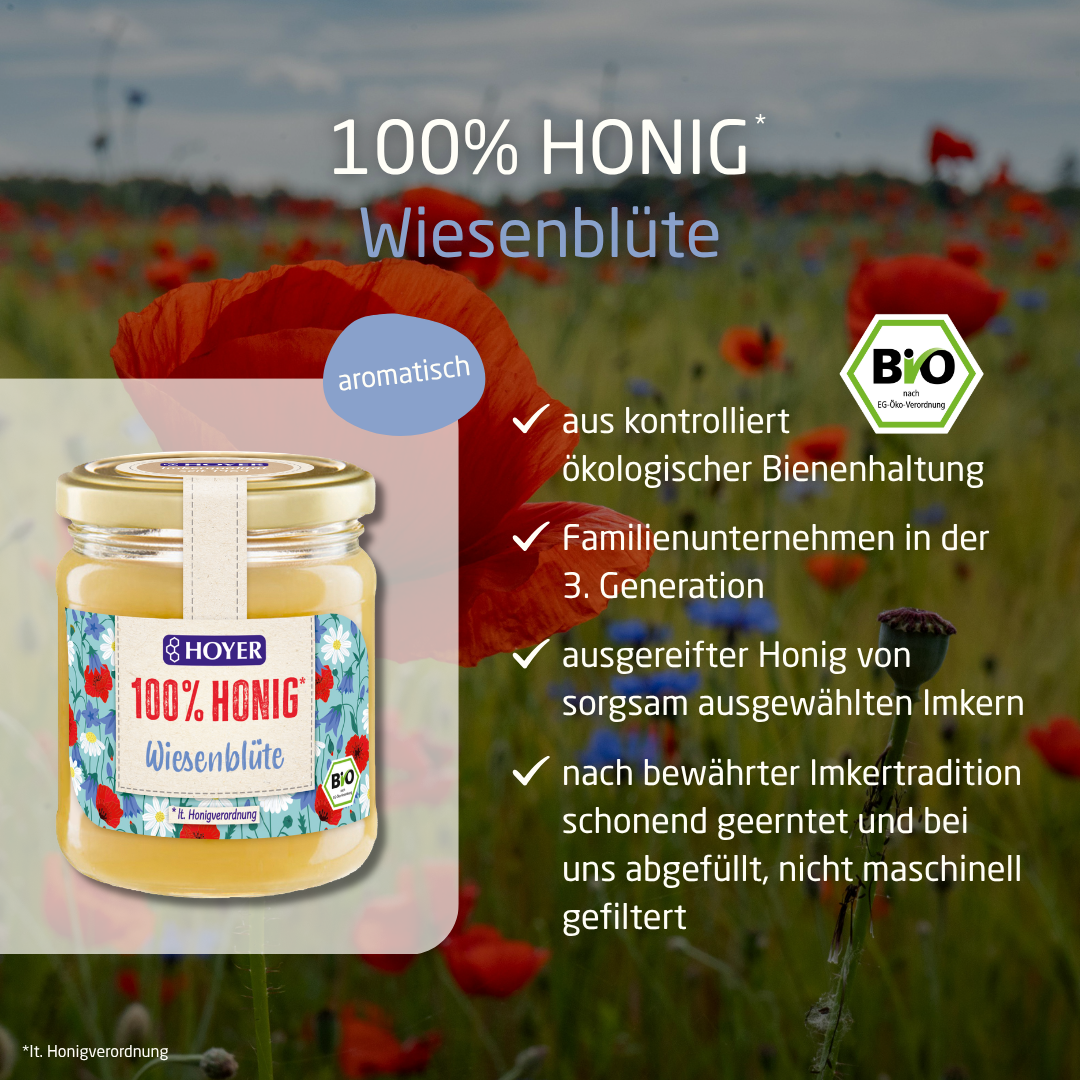
  • Meadow blossom honey
    Meadow blossom honeyMeadow blossom honey
    Vendor:
    Meadow blossom honey
    Regular price
    €4,29
    Regular price
    Sale price
    €4,29
    Unit price
    €17,16  per  kg
    Deutsches Bio-Siegel

    4 total reviews

    Add to cart
    Quick view
  • Acacia honey squeeze bottle
    Acacia honey squeeze bottleAcacia honey squeeze bottle
    Vendor:
    Acacia honey squeeze bottle
    Regular price
    €6,49
    Regular price
    Sale price
    €6,49
    Unit price
    €25,96  per  kg
    Deutsches Bio-Siegel

    1 total reviews

    Add to cart
    Quick view
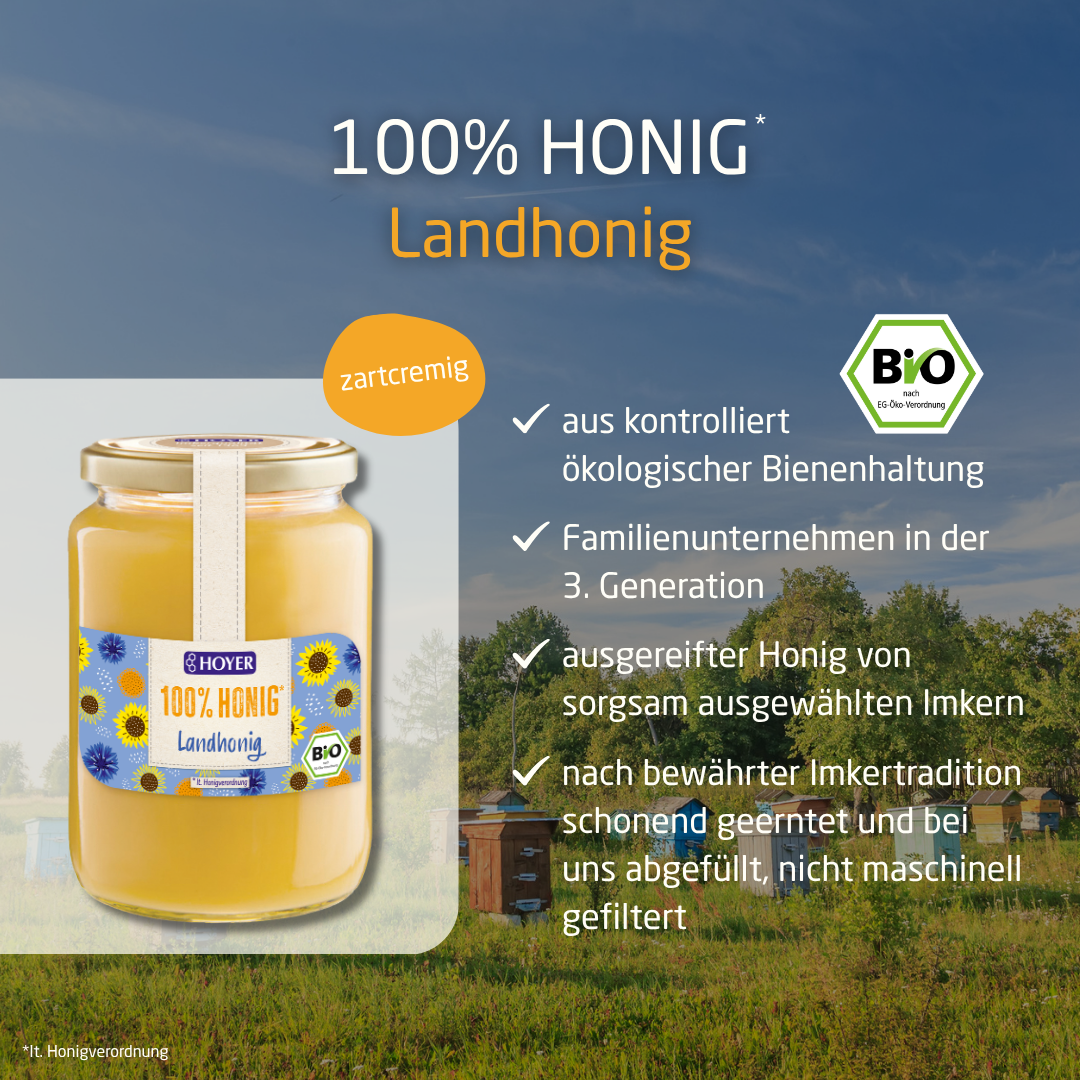
  • Country honey
    Country honeyCountry honey
    Vendor:
    Country honey
    Regular price
    €13,49
    Regular price
    Sale price
    €13,49
    Unit price
    €13,49  per  kg
    Deutsches Bio-Siegel

    8 total reviews

    Add to cart
    Quick view

Organic vs. conventional

Why organic honey?

Since 2000, guidelines fororganic beekeeping have been laid down by the EU Organic Farming Regulation. The most important Rules of organic beekeeping:

  • No use of synthetic chemicals in the honey harvest, in the treatment of bee diseases and for the control of
    pests.
  • Beehives may only be made of natural
    materials.
  • If winter feeding is permitted, the feed (sugar) must be 100% organically produced.
  • The location of the beehives must be chosen so that non-organically or organically farmed areas are in the vicinity wherever possible.
  • Beeswax for new central walls must come from organic production.
  • No clipping of the queen bee's wings.

FAQ - Frequently asked questions about our honey

Here you will find answers to frequently asked questions about our high-quality organic honey.

Why is it that some honeys are liquid and some are creamy?

Honey is clear and viscous when the beekeeper extracts it from the combs. And all honey forms crystals at some point, which cause it to solidify. Depending on the composition of the honey, this transition (crystallization) from liquid to solid happens within a few days to a few months. The ratio of the two types of sugar, glucose and fructose, plays a decisive role in this process. The more glucose a honey contains, the faster crystals form. The more fructose, i.e. fruit sugar, it contains, the longer the honey remains liquid. A ratio of approx. 1:1, as is the case with rapeseed honey, for example, means very rapid crystallization within a few days. With a predominant ratio of fructose of around 1.5:1 (e.g. acacia honey), on the other hand, the honey remains liquid for months or even years.

What is the best way to store honey?

Honey has an almost unlimited shelf life thanks to its high sugar content and natural antibiotic substances. Nevertheless, a few basic rules should be observed with regard to enzymes and taste, among other things:

  • Best stored in a dark place
  • Avoid direct sunlight at all costs
  • Store at temperatures between 10° and 20°
  • Always store in a dry place and tightly closed

Depending on the dextrose content, liquid honey can start to crystallize after a long period of time. To liquefy the solidified honey again, it is sufficient to heat it slowly in a water bath at a maximum temperature of 40°.

Why does HOYER offer honey from other countries?
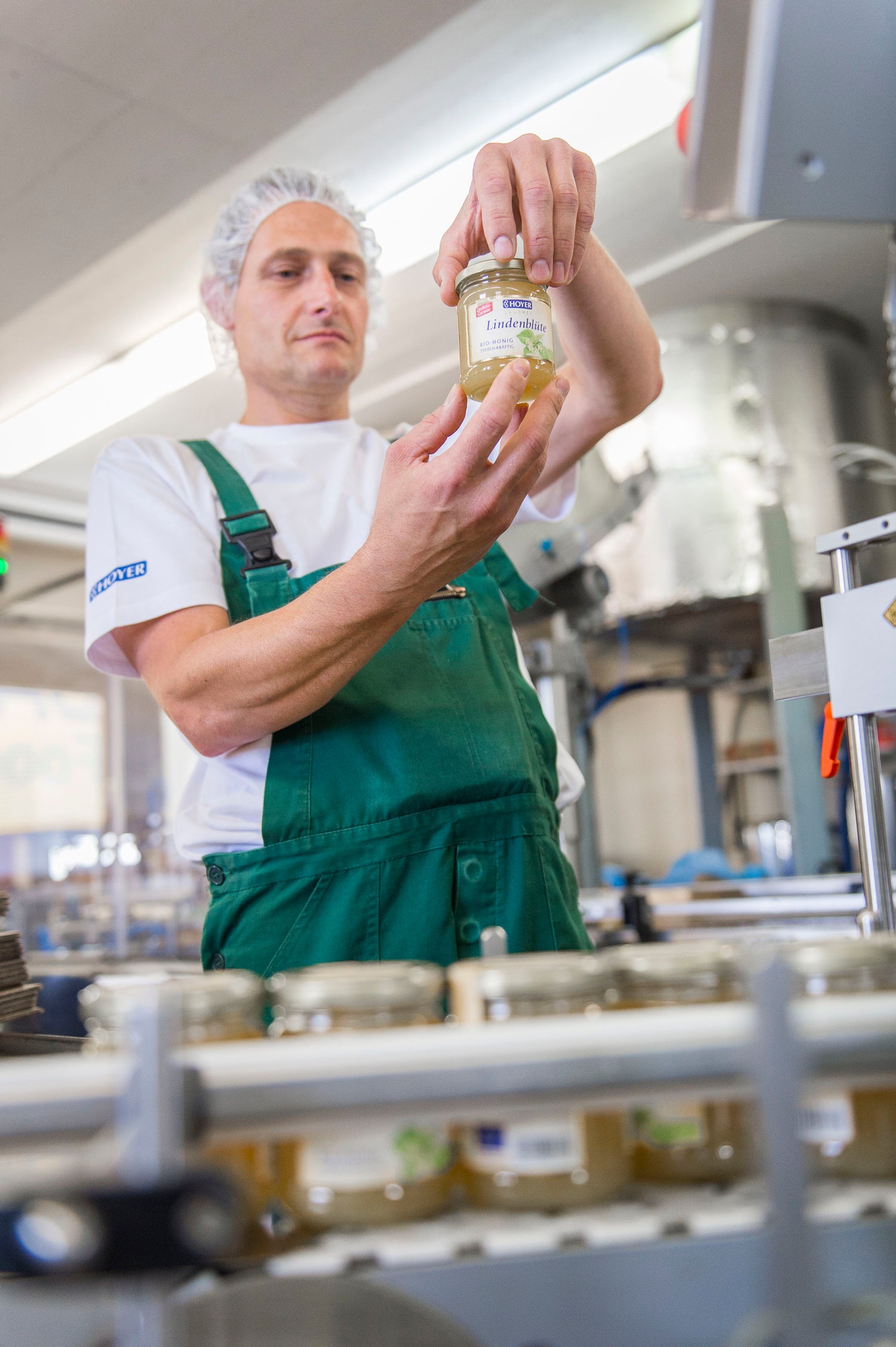
With an average of 1.0 kg per capita and year, Germans are among the world leaders in honey consumption. Due to climatic conditions, domestic production is not sufficient to meet the high demand for this sweet treat. In Germany, only about 15,000 - 20,000 tons of honey are harvested annually, while about 80 percent of the honey consumed is imported from regions of the world where climatic and botanical conditions are optimal for several harvests per year. Thus, many honeys come to Germany from the warmer countries of Europe as well as from Central and South America.

Thanks to the different climatic conditions and the accompanying flora, honey can be "harvested" all year round somewhere in the world. Thus, there is not only a year-round supply of honey, but also an unsurpassable variety. Honey can be compared to wine in this respect: the decisive factor for the taste, color and consistency of this natural product is its origin - both botanically and geographically.

With the power of nature

HOYER

Founded in 1969 as a beekeeping business in Polling, Upper Bavaria, we can now look back on decades of experience from the production to the processing of high-quality beekeeping products.

HOYER stands for trust, enjoyment & reliability and we strive to uphold and continuously develop these values.

Dive into the world of bees and enjoy honey and other beekeeping products in the best organic quality.

More about Hoyer